
Climbing Mount Fuji with Arthritis: 17 Unforgettable Days in Japan with My Daughters
I just returned from 17 unforgettable days in Japan with my husband and our three adult daughters. We were celebrating my husband's 60th birthday this year and my twin daughters graduating university.
Traveling with a full house of grown women can be a whirlwind, but Japan captured all five of us in a way few destinations ever have.
From the serenity of Lake Kawaguchiko and the beauty of Kyoto—which both stole my heart as my absolute favourites —to the bustling streets of Tokyo, we didn't just visit a new country; we witnessed a completely different way of living.
As North Americans, we are conditioned to hurry, multitask, and consume on the go.
Japan flipped that mirror right back on us. Here are my biggest takeaways from our family journey, along with a few lessons in physical resilience I won't soon forget.
1. Conquering Mount Fuji: A Personal Triumph of Resilience
If there was one defining moment of the trip, it was ascending Mount Fuji. We climbed for 6 hours on the Yoshida trail from the 5th to the 8th station on Day 1, slept until 2am, then climbed another 2.5 hours to reach the summit of 3,776 meters (12,388 feet) on Day 2 for sunrise.
I thought I was physically prepared, but the climb actually tested every ounce of my mental strength and resiliency.
Living with Rheumatoid Arthritis and Spinal Stenosis, every step up that steep, volcanic terrain presented a unique challenge. My body felt the strain in ways that are hard to describe, and there were moments where sheer determination was the only thing keeping my feet moving forward.
What was going through my mind with every step? My 88-year old parents. My mom has incredible diabetic neuropathy pain and suffering every day with limited mobility now; and my dad has such bad hip and leg pain that he also needs assistance walking now too. I climbed every step of that for them, and for future me.
Reminding myself as I climbed over another boulder, another scary slippery rock, as I pulled myself up on the ropes or dug my pole in, that my body is strong and resilient and able to do hard things.
Digging deep into my mental resilience skills—focusing on one breath, one small step at a time, and leaning on the quiet encouragement of my family—got me to the top.
Making the final few steps to cross over onto that summit was both breathtaking and overwhelming. Of course I cried. I feel an immense sense of pride not just for making it up, but for proving to myself what my body can overcome when my mind stays steady.

2. The Art of Single-Tasking & Staying Present
One of the first cultural norms you notice across Japan is that nobody eats on the move.
You won’t see people sipping giant lattes while rushing to work or eating ice cream cones while strolling down the sidewalk. If you buy a snack from a street vendor, you stand right there, finish it, throw your trash in the provided bin, and then carry on.
Food isn't treated as fuel to pump into your body while doing three other things; it’s an experience that deserves your full presence.
North American Habit to Break: Mindless eating in the car or over a keyboard. Japanese Lesson: Sit down, slow down, and do one thing at a time.
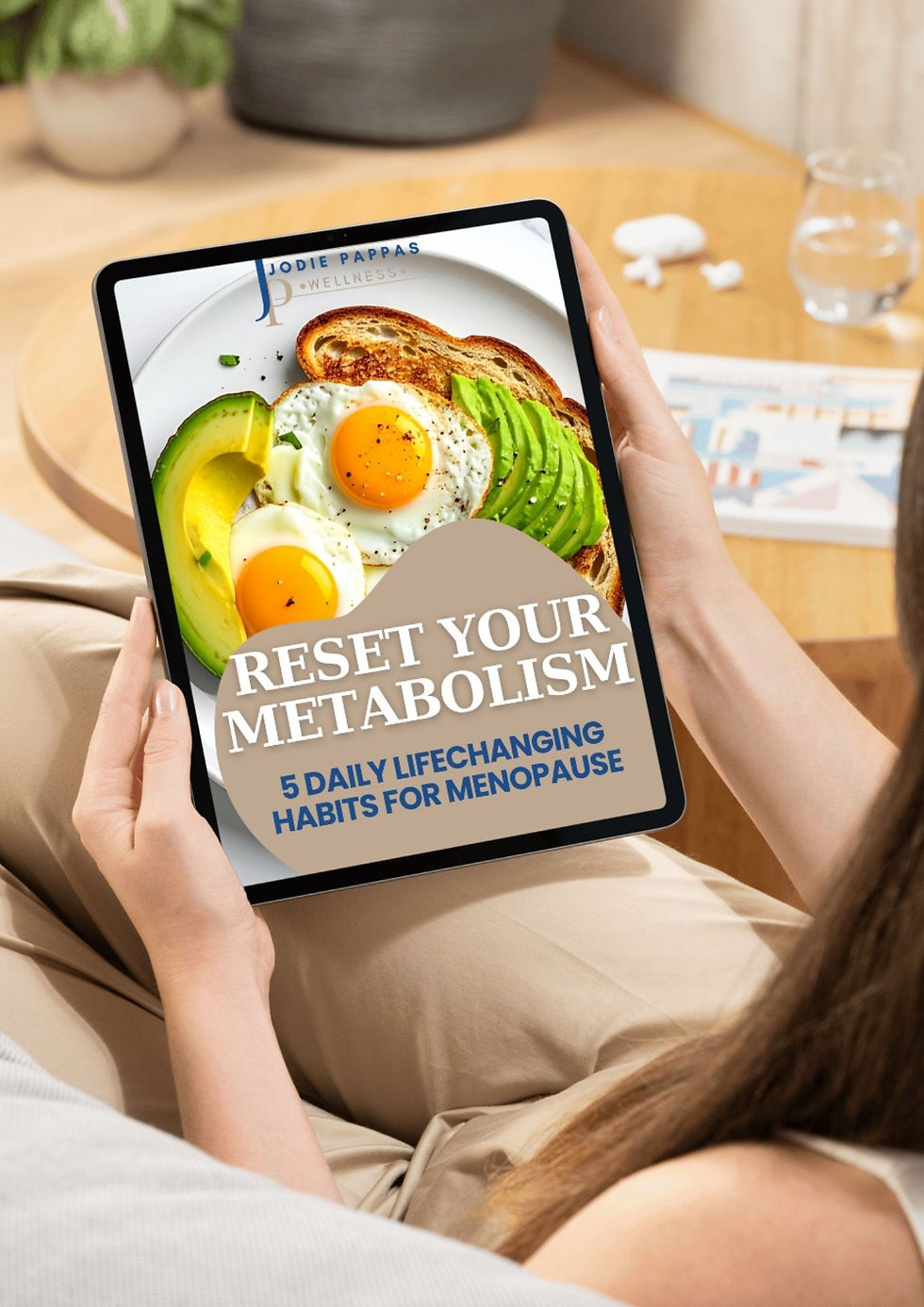
In my guide, Reset Your Metabolism, I show you how to be more mindful like the Japanese and exactly the formula for turning off hunger hormones for the rest of the day. Plus, I share the non-negotiable morning ritual you need to do before you touch your first cup of coffee.
3. What They Eat (That We Don't Eat Enough Of)
In North America, we’ve been taught to fear carbohydrates, yet white rice, udon, and ramen are staple foods consumed daily in Japan. The secret isn't cutting out food groups—it's portion control and filling the plate with nutrient-dense ingredients we rarely see at home.
While raw vegetable salads aren't common in Japanese dining, they incorporate incredible plant density in other ways:
Fermented Foods: Miso, natto (fermented soybeans), and tsukemono (pickled vegetables) are served daily, filling their diets with natural probiotics that support gut health and immunity.
Sea Vegetables: Nori (seaweed wraps), wakame (in soups), and kombu (kelp broth) supply vital minerals like iodine, zinc, and calcium with virtually zero calories.
Soy in Natural Forms: Unlike processed soy isolates found in Western pre-packaged foods, the Japanese eat whole, minimally processed soy like tofu, edamame, and tempura-style tofu.
Moderate Protein: Meat is treated more like a flavourful accent or small side than a giant 12-ounce centerpiece.
They eat until they are hara hachi bu—a traditional Okinawan phrase meaning "eat until you are 80% full."
4. The Green Tea & Matcha Daily Ritual
You cannot talk about Japanese health without mentioning green tea. It isn't just a beverage; it’s a daily wellness ritual woven into the culture.
Every restaurant greets you with hot or iced green tea (often free and endlessly refilled), and vending machines on every corner stock unsweetened bottled tea.
Sencha & Hojicha: Loose-leaf green teas packed with epigallocatechin gallate (EGCG), a powerful antioxidant known to reduce inflammation, support heart health, and aid digestion after meals.
Matcha: Finely ground whole green tea leaves consumed in ceremonial whisked form or lattes. Because you ingest the actual leaf rather than steep it, matcha delivers a concentrated dose of antioxidants along with L-theanine—an amino acid that promotes "calm alertness" without the jittery crash of coffee.
5. Bring Japan to Your Kitchen: Classic Kake Udon
Udon noodles are a staple comfort food across Japan. What makes Japanese noodle soups so light yet deeply satisfying is the broth base—known as kakejiru—which combines clear umami broth (dashi) with light soy sauce and mirin.

Quick Homemade Udon Noodle Soup (Serves 2)
Ingredients:
2 portions frozen or fresh udon noodles (pro tip: frozen udon cakes from the Asian grocery store have a vastly superior, chewy texture compared to vacuum-packed shelf-stable noodles!)
3 cups water
1.5 tsp dashi powder (Japanese soup stock powder)
2 tbsp soy sauce (preferably usukuchi / Japanese light soy sauce)
2 tbsp mirin (Japanese sweet rice wine)
1/2 tsp sugar
Optional Toppings: Sliced green onions, sliced kamaboko (pink fish cake), aburaage (seasoned fried tofu pockets), or a sprinkle of shichimi togarashi (Japanese seven-spice mix).
Preparation:
Prepare the Noodles: Bring a pot of water to a boil. Add the frozen udon noodles and cook for 2–3 minutes just until they loosen and soften. Drain thoroughly and divide between two warm noodle bowls.
Make the Broth: In a separate saucepan, combine the 3 cups of water, dashi powder, soy sauce, mirin, and sugar. Bring to a gentle simmer over medium heat for 2 minutes to let the flavors meld together.
Assemble: Ladle the hot broth directly over the cooked noodles in each bowl.
Garnish & Serve: Top generously with finely chopped green onions, a slice or two of fish cake, and a dash of seven-spice mix. Slurp while piping hot!
6. Structure, Respect, and the Cleanest Restrooms on Earth
Navigating public transit across multiple cities with five adults should have been a recipe for stress. Instead, it was remarkably effortless.
The Transit System: Overwhelming at first glance, but so logically structured, punctual, and quiet that navigating it became second nature.
Social Discipline: No one speaks loudly on trains, pushes in line, or acts aggressively. The culture operates on mutual respect and quiet consideration for everyone around you.
The Hygiene: We need to talk about the toilets! Japanese bidets and heated seats are famous for a reason—the public sanitation everywhere set a benchmark I wish we could copy overnight. I definitely see a bathroom reno in our future! (Here's a Reel I posted sharing the cool toilet!)
7. The Health Stats: Japan vs. North America (U.S. & Canada)
During our 17 days of walking everyday and logging almost 20,000 steps daily, I kept wondering: How does this daily lifestyle translate to long-term health?

The health data comparing Japan to both Canada and the U.S. speaks volumes:
Obesity & Movement
Japan: Only 3.6% to 4.5% of adults are clinically obese.
Canada: Roughly 33% of Canadian adults (1 in 3) are classified as obese, with combined overweight and obesity rates reaching nearly 65%.
United States: Over 40% of American adults are clinically obese.
Daily Movement: Japanese adults walk an average of 2,000+ more steps a day than North Americans—simply through built-in daily habits like walking to transit, climbing station stairs, and running errands.
Cancer Rates
Breast Cancer: Breast cancer rates in Japan have historically been dramatically lower than in the West.
Women in Canada and the U.S. are roughly 4 to 5 times more likely to be diagnosed with breast cancer than native Japanese women.
Researchers point largely to dietary factors (high soy, seaweeds, lower saturated fat) and high daily activity levels.
Menopause Experience (Kōnenki)
In Japan, the transition through menopause is called kōnenki, viewed culturally as a natural adjustment period rather than a breakdown of the body.
Japanese women report significantly lower rates of severe hot flashes compared to Western women. Dietary phytoestrogens (from daily soy foods like miso and tofu) and lower overall stress levels play a major supporting role.
Life Expectancy
Japan consistently boasts one of the highest life expectancies in the world, averaging ~84.5 to 85 years (with Japanese women reaching nearly 88 years). Canada averages around 82 years, while the U.S. sits around 77 to 78 years.
Bringing Japan Home
Traveling with my three daughters as adults was a gift in itself (and at times an exercise in patience and compassion for each other ~ let's just say I got to use my deep breathing skills a few times), but experiencing Japan together gave us a collective baseline for how we want to live back home.
We don't need to completely overhaul our lives, but we can choose to walk a little more, swap a second coffee for matcha, put our phones away when we sit down to dinner, practice physical and mental resilience when things get tough, and treat our bodies with a bit more mindfulness.
About the Author
Jodie Pappas, CNP is a Holistic Nutritionist specializing in Menopausal Metabolism and the psychology of behavioural change.
In an era of "quick fixes" and restrictive dieting, Jodie provides a science-forward alternative: a longevity-based framework that prioritizes muscle mass, insulin sensitivity, and emotional resilience.
As the founder of Jodie Pappas Wellness, she has helped hundreds of women transition from "surviving symptoms" to optimizing their healthspan for the decades ahead.
Jodie believes that once you master your metabolism, you master your future. She lives in Oakville, Ontario, Canada and is a firm believer that heavy weights and high protein are a woman's best friends after forty.
Jodie works with women across the globe through her virtual clinical practice as well as in-person in Oakville, Ontario.


Comments